Buying on the Gulf Coast can feel like a dream until you realize the waterfront view may also come with rules, fees, reserve questions, and maintenance obligations you did not expect. If you are considering a condo or home in a waterfront community, you need more than a quick glance at dues and amenities. You need to understand how Florida Gulf Coast waterfront HOAs and condo associations actually work, what they can require, and what you should review before closing. Let’s dive in.
Gulf Coast waterfront HOA basics
On the Florida Gulf Coast, waterfront communities are usually set up in one of two ways: as condominiums under Chapter 718 or as planned communities and homeowners’ associations under Chapter 720. Both are Florida corporations, and their officers and directors owe fiduciary duties to owners.
That legal structure matters because it shapes your costs, your maintenance responsibilities, and your day-to-day ownership experience. A waterfront condo and a waterfront HOA may both offer water access, shared amenities, and neighborhood rules, but they often operate very differently.
Condos vs HOAs on the waterfront
How condos usually work
In a condominium, the association generally manages more of the property. Florida law gives condo associations the power to collect assessments and to lease, maintain, repair, and replace common elements or association property.
That often means the association has a larger role in maintaining the building and shared site features. Common elements are typically the association’s responsibility, except for limited common elements that the declaration assigns to a unit owner.
How planned-community HOAs usually work
In a planned community, the HOA is more parcel-based. That usually means you own your home and lot, while the association governs shared areas and enforces the community’s recorded standards.
Florida law limits an HOA’s architectural and exterior-control authority to what is stated or reasonably inferred in the declaration or published guidelines. The association must apply those standards reasonably and equitably.
Why this difference matters
If you are choosing between a waterfront condo and a waterfront home in an HOA, the question is not only lifestyle. It is also about who maintains what, how expenses are shared, and how flexible the property may be for changes and improvements.
For example, a condo may involve more association-managed maintenance, while an HOA community may put more upkeep on the individual owner. On the Gulf Coast, that distinction becomes especially important when docks, seawalls, marina facilities, and shoreline improvements are part of the picture.
What rules can affect waterfront owners
Architectural controls and exterior changes
In an HOA community, architectural control must come from the governing documents or published standards. Those standards must be applied reasonably and equitably, which is important if you are planning exterior changes, storm protection improvements, or updates to your waterfront property.
Florida law also protects conforming hurricane-protection installations and requires boards to adopt hurricane-protection specifications. If storm preparation is part of your Gulf Coast plan, this is a key area to review before you buy.
Common-area access and use
In HOA communities, common areas and recreational facilities must be available to parcel owners and their invited guests for the intended use. In condo communities, the association may not charge a use fee for common elements unless the declaration or a majority vote allows it, or the charge relates to exclusive use.
That means you should not assume access rules are the same from one waterfront community to the next. A boat slip, clubhouse, dock, pool, or marina-adjacent amenity may come with separate use rules, fees, or ownership structures.
Fines and suspension rights
Florida associations can enforce their rules. In HOAs, reasonable fines may be imposed for rule violations, and if an owner is more than 90 days delinquent on monetary obligations, the association may suspend common-area use rights and voting rights until the debt is paid.
This is one reason document review matters so much. What looks like a relaxed waterfront lifestyle on the surface may still involve firm enforcement behind the scenes.
What dues may really cover
Assessments can be broader than expected
On the Gulf Coast, many buyers focus first on monthly dues. That is important, but the bigger question is what those dues actually pay for.
Florida treats assessments and amenity fees broadly. They may be payable to the association, developer, or another owner of common areas or recreational facilities, and unpaid amounts can result in a lien.
Amenity charges may be separate
HOA budgets must separately show fees or charges for recreational amenities, even when those amenities are owned by someone other than the association. In a waterfront setting, that can matter if the community includes marina features, slips, docks, or other shared waterfront assets.
So if you are comparing two similar properties, do not stop at the advertised HOA fee. Ask whether there are separate amenity charges, leased facilities, or shared-use arrangements that affect your true monthly and annual cost.
Reserves and special assessments
HOA reserves are more flexible
In Florida HOAs, members can approve fully funded reserve accounts by majority vote, but the budget can also include limited voluntary deferred-expense accounts. If reserves are not fully funded, the annual financial report must warn that special assessments may result.
That warning matters on the waterfront. Shoreline improvements, common-area repairs, and storm-related projects can be expensive, and underfunded reserves may increase the chance of future special assessments.
Condo reserve requirements are stricter
Condominiums in Florida follow stricter reserve rules. Condo budgets must include reserve accounts for capital expenditures and deferred maintenance, including roof replacement, building painting, and pavement resurfacing.
As of May 4, 2026, owner-controlled condo associations that existed on or before July 1, 2022 were required to complete structural integrity reserve studies for buildings three stories or higher by December 31, 2025. If a milestone inspection is required, the structural integrity reserve study can be completed with it through December 31, 2026, but not later.
Why buyers should care
A reserve study or reserve shortfall is not just an accounting detail. It can affect your monthly costs, your risk of a special assessment, and your comfort with the community’s long-term planning.
If you are buying a waterfront condo, you should review whether a structural integrity reserve study has been completed, whether a milestone inspection applies, and how the association plans to fund recommended work.
Insurance and flood issues on the Gulf Coast
Flood risk is central
Flood risk is one of the most important parts of buying waterfront property on the Gulf Coast. Most homeowners insurance does not cover flood damage, so flood insurance is a separate policy.
Risk can be affected by storm surge, coastal erosion, heavy rainfall, elevation, distance to water, and rebuild cost. If you are planning improvements after closing, FEMA advises buyers to consult the community’s floodplain administrator before making changes.
Condo insurance may not cover your interior
Many buyers assume the condo association’s policy will cover everything inside the unit. In Florida, that is not the case.
Florida law excludes personal property and many interior finishes within the unit or limited common elements from the association policy, and that property is the unit owner’s responsibility. Before you buy, confirm what the association insures and what separate owner coverage you may need.
Deductibles can affect owners too
Florida law allows condo boards to set insurance deductibles based on available funds and assessment authority. Uninsured deductibles or excess losses can become common expenses.
For buyers, that means insurance costs are not only about your own policy. They may also affect the association budget and future assessments.
Waterfront assets need special review
Docks, slips, and seawalls are not always simple
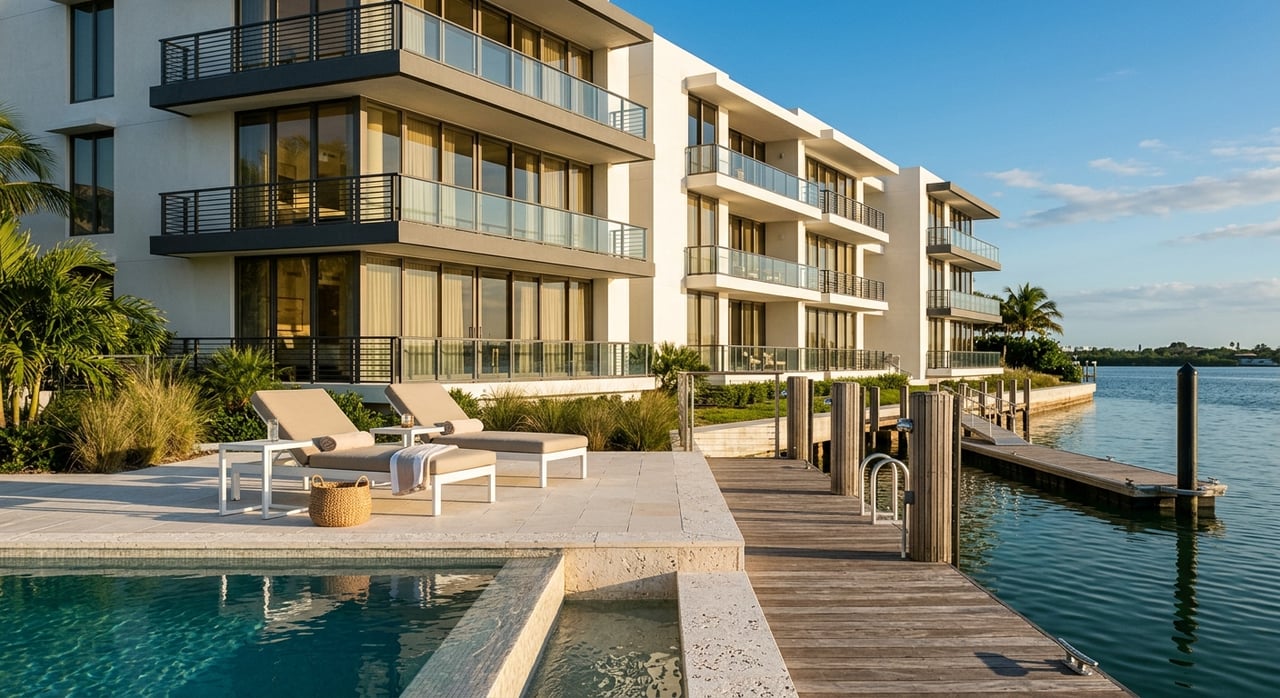
Some of the most valuable waterfront features are also the easiest to misunderstand. Docks, slips, marina facilities, seawalls, and similar shoreline improvements may be association-maintained, partially shared, leased, or separately owned.
Florida law ties maintenance and reserve planning to what the declaration says the association must maintain. That means your rights and obligations may depend heavily on the governing documents, not just on how the listing or marketing materials describe the property.
Ask specific questions before closing
If a waterfront feature matters to you, confirm the exact maintenance and payment structure before you buy. Do not assume a slip is deeded, a dock is common property, or a seawall is fully maintained by the association unless the documents clearly say so.
This is one of the places where local waterfront experience can make a real difference. A beautiful view is easy to spot. The ownership and maintenance structure behind it takes a closer look.
Records and transparency to review
Meeting and record access
Florida law gives owners important access rights. HOA board meetings are open to members, members may speak on designated agenda items, and meetings that consider special assessments or rule changes require advance notice.
Condominium records are also subject to strong transparency rules. Official records generally must be kept for seven years and made available within 10 working days of a written request.
Disputes may go to mediation first
In HOA matters, disputes over common-area use, covenant enforcement, document amendments, board meetings, and official-record access generally must go through presuit mediation before court. The state Division of Condominiums, Timeshares, and Mobile Homes provides complaint resolution, mediation, arbitration, and education.
For buyers, this reinforces the value of getting records early. If documents are difficult to obtain or answers seem unclear, that may tell you something important about how the community operates.
What to request before closing
Before you close on a Gulf Coast waterfront condo or HOA property, ask for a full set of key documents. A careful review can help you understand both the lifestyle and the financial picture.
Buyer document checklist
- Declaration
- Bylaws
- Current rules and regulations
- Annual budget
- Most recent financial report
- Structural integrity reserve study, or a statement that none has been completed
- Milestone-inspection summary, if applicable
- Insurance information
- Management contracts
- Maintenance contracts
- Recreational-facility leases
HOA estoppel details to confirm
In HOA transactions, the estoppel certificate should also show:
- Regular assessments
- Special assessments
- Transfer fees
- Open violations
- Related associations
- Insurance contacts
New-construction condo note
In new-construction condo sales, Florida gives buyers a 15-day voidability window after the required documents are delivered. If you are buying new on the Gulf Coast, document timing and delivery are especially important to track.
How to approach a waterfront HOA with confidence
The best Gulf Coast waterfront communities can offer an incredible lifestyle, from boating access to low-maintenance living to shared amenities that support everyday coastal life. But the right fit depends on understanding the legal structure, maintenance obligations, reserve planning, insurance picture, and waterfront asset details before you commit.
If you are buying from out of state, comparing multiple waterfront options, or considering a condo versus a single-family home in an HOA, a thorough review can help you avoid expensive surprises. When you understand how the community functions behind the scenes, you can make a decision that supports the lifestyle you actually want.
If you are weighing waterfront communities along the Gulf Coast and want clear guidance on the details that matter most, Jo-Lee Mansfield can help you evaluate the lifestyle, ownership structure, and waterfront considerations with the high-touch local insight Costa Living is known for.
FAQs
What is the difference between a Gulf Coast condo association and a waterfront HOA?
- A condo association usually manages more of the building and shared property, while an HOA is typically more parcel-based and governs individual homes and common areas according to the recorded documents.
What should buyers review before purchasing in a Gulf Coast waterfront HOA?
- You should review the declaration, bylaws, rules, budget, financial report, insurance information, maintenance contracts, amenity leases, and any reserve-study or inspection materials that apply.
Can a Florida waterfront HOA charge separate amenity fees?
- Yes. Florida law allows fees or charges for recreational amenities to be shown separately in the HOA budget, even when those amenities are owned by someone other than the association.
Are docks and seawalls always maintained by the waterfront HOA or condo association?
- No. Maintenance responsibility depends on the governing documents, and waterfront assets like docks, slips, marina facilities, and seawalls may be association-maintained, shared, leased, or separately owned.
Does a Gulf Coast condo association’s insurance cover everything inside my unit?
- No. In Florida, the association policy does not cover personal property and many interior finishes within the unit or limited common elements, so owners should verify what separate coverage they need.
Can a Florida HOA suspend amenities for unpaid dues?
- Yes. In an HOA, if an owner is more than 90 days delinquent on monetary obligations, the association may suspend common-area use rights and voting rights until the debt is paid.