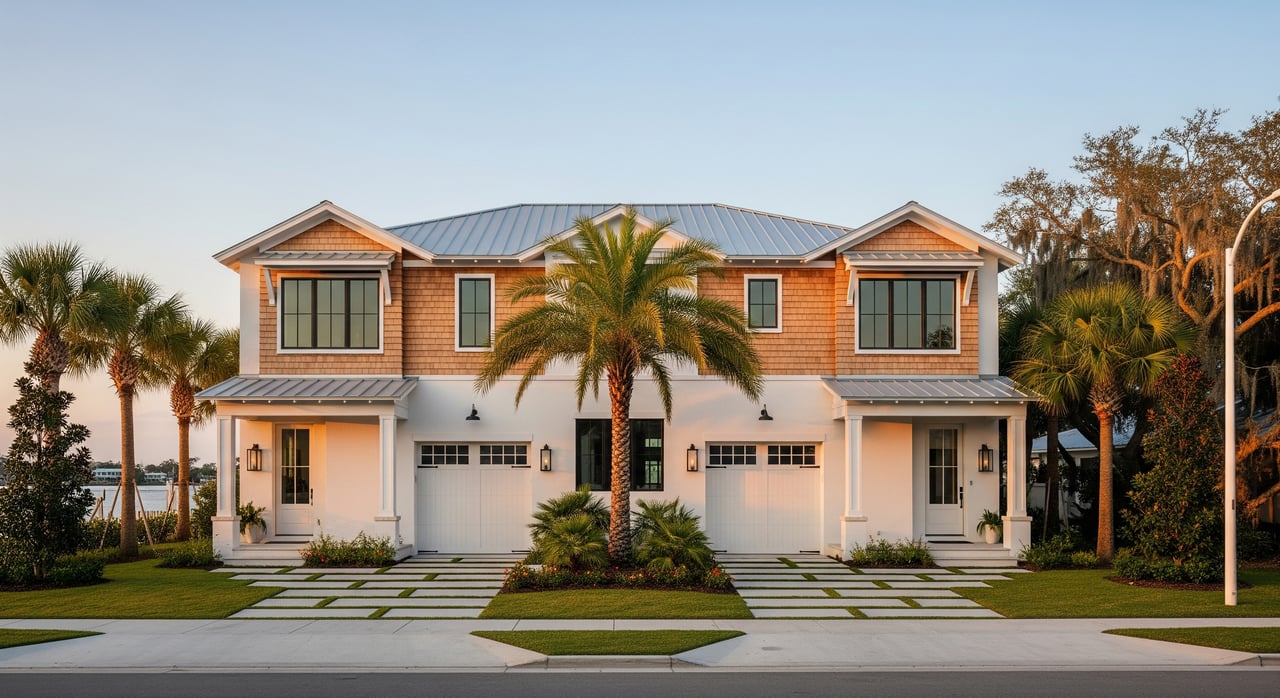
Thinking about buying a duplex in Bradenton but not sure where to start? You’re smart to look closely before you commit. Duplexes can generate steady income, diversify risk with two units, and offer owner-occupant financing options if you live in one side. In this guide, you’ll learn how to evaluate the market, run the numbers, confirm local rules, and manage risk in Manatee County. Let’s dive in.
Why focus on Bradenton duplexes
Bradenton sits in a growing Gulf Coast corridor with steady demand from retirees, professionals, and remote workers. Its coastal setting also brings unique factors like flood risk and seasonal rental pressure. If you account for those correctly, a duplex can be a durable asset with more flexibility than a single-family rental.
You can approach a duplex two ways. You might live in one unit and rent the other to offset your housing costs. Or you can hold it strictly as an investment. In both cases, the core evaluation steps are the same.
Start with the local market
Bradenton is not a single market. Rental rates, vacancy, and resale demand vary by neighborhood and by proximity to employment centers and I-75. Seasonal demand near the coast can also affect pricing and turnover.
Check these fundamentals before you run any pro forma:
- Population and household growth: Use the U.S. Census Bureau’s American Community Survey for trends in income, renter share, and household size.
- Jobs and unemployment: Review the Bureau of Labor Statistics local employment data for the Sarasota–Bradenton region to understand employer stability.
- Sales price trends: The Florida Realtors Research and Statistics hub publishes statewide and local market reports you can use to benchmark pricing momentum.
Neighborhood-level variation
Expect differences between downtown Bradenton, West Bradenton, and areas near Lakewood Ranch or the I-75 corridor. Focus on commute routes, access to services, and nearby job centers. Keep your analysis neutral and data-led so you can compare submarkets side by side.
What data to pull now
- Recent duplex and small multifamily sales via the local MLS.
- Current rents for comparable 1 and 2 bedroom units within a 1 to 3 mile radius.
- Estimated vacancy based on nearby rentals and property manager feedback.
- Insurance and flood status for each specific property, not just the neighborhood.
Run the numbers the right way
Before you fall in love with a property, pressure test the cash flow with conservative assumptions. Start with these core metrics:
- Gross Scheduled Income (GSI): expected total annual rent plus other income.
- Effective Gross Income (EGI): GSI minus vacancy and credit loss.
- Net Operating Income (NOI): EGI minus operating expenses. Do not include loan payments here.
- Cap Rate: NOI divided by purchase price.
- Cash-on-Cash Return: annual pre-tax cash flow divided by your cash invested.
- Gross Rent Multiplier (GRM): purchase price divided by annual gross rent.
Pro forma checklist
- Rents: Use current market rents by unit type. If tenant occupied, compare in-place rents to market.
- Vacancy: Start with 5 to 10 percent and stress-test higher.
- Expenses: Include taxes, insurance, utilities you pay, repairs, reserves at 5 to 10 percent of rents, management at 8 to 12 percent if not self-managing, and HOA if applicable.
- Debt: Model rate, term, points, and closing costs. Compare fixed vs adjustable.
- Sensitivities: Test lower rents, higher vacancy, and insurance shocks before you offer.
Financing a duplex in Manatee County
Financing choices affect both returns and risk. Explore options early and verify program rules.
Owner-occupant options
- FHA: Owner-occupied 2 unit properties may qualify with low down payment. Check county loan limits with the HUD FHA mortgage limits lookup.
- VA: Eligible veterans can finance 2 units if they occupy one.
- Conventional owner-occupant: Fannie and Freddie allow 2 to 4 units with varying down payments and credit requirements. Confirm mortgage insurance impact on cash flow.
Non-owner investment loans
- Conventional investment: Commonly 20 to 25 percent down with stronger reserve requirements. Some lenders use DSCR underwriting.
- Local banks and portfolio lenders: Community banks and credit unions may offer flexible terms for small multifamily.
Request quotes for both owner-occupied and investment scenarios if you have flexibility to live in one unit. Compare total cost of funds, not just the rate.
Zoning, taxes, and insurance in Bradenton
Local rules can make or break your plan. Verify details for the specific parcel, not just the general area.
Zoning and permitted use
Confirm that the property is a legal 2 unit dwelling in the correct zoning district. The City and County have separate codes. Start with the City of Bradenton Planning Division and the county’s development services pages to verify use, parking, setbacks, and any approvals needed for changes or additions.
If you intend to explore short-term rentals, review local rules, registration, and occupancy limits before you buy. Requirements vary and can change.
Property taxes and exemptions
Review parcel tax history, assessed value, and exemptions with the Manatee County Property Appraiser. Florida’s homestead exemption applies only to a primary residence. If you live in one unit, discuss eligibility and how the property is titled with the appraiser’s office.
Landlord-tenant law
Florida landlord-tenant rules are set mainly at the state level. Study deposits, notices, and timelines in Florida Statutes Chapter 83 so your leases and procedures align with the law.
Insurance and flood risk
Insurance is a major expense driver in coastal Florida. Obtain multiple quotes during due diligence and confirm coverage details, windstorm deductibles, and required upgrades.
- Flood: Use the FEMA Flood Map Service Center to check flood zone status and whether flood insurance is required by lenders.
- Market conditions: Pricing and availability can change quickly. The Florida Office of Insurance Regulation provides statewide guidance, and the Citizens Property Insurance Corporation is a last-resort option if private coverage is unavailable.
Property-level due diligence that matters
Your goal is to confirm legal use, real income and expenses, and physical condition before you close.
Pre-offer checks
- Legal units: Verify permits and that both units are recognized by the jurisdiction.
- Leases and deposits: Review lease terms, rent rolls, payment history, and deposits for any occupied units.
- Physical condition: Inspect structure, roof, HVAC, plumbing, electrical, drainage, and pest. Roof age and wind mitigation features are especially important locally.
- Flood and elevation: Review flood status and any elevation certificates.
- Utilities: Confirm who pays what and whether the property is submetered.
- HOA: If applicable, confirm rental permissions and minimum lease terms.
Red flags to watch
- Unpermitted conversions or additions.
- Deferred maintenance that could trigger large near-term capex.
- Rent claims that do not match leases or market.
- Properties with repetitive flood loss or high prior insurance claims.
Model risks and plan exits
Even strong properties can underperform without a cushion. Build a plan for surprises.
Stress tests to run
- Vacancy up by 5 to 10 percentage points.
- Rents down by 5 to 15 percent.
- Insurance premiums up significantly year one.
- Big-ticket items such as roof or HVAC earlier than expected.
- Refinance at higher rates or delayed due to market shifts.
Exit paths
- Long-term hold for stable cash flow.
- Value add improvements followed by refinance or sale.
- Potential conversion of one unit to short-term rental if compliant with local rules.
- Resale to an owner-occupant who values the second unit’s income.
How Costa Living can help
You deserve a partner who understands both the lifestyle and the numbers. Our team brings coastal knowledge, builder experience, and concierge coordination to help you source, evaluate, and close on Bradenton duplexes with confidence. We can guide zoning checks, coordinate inspections, arrange flood and insurance reviews, and provide data-led pricing advice through the MLS.
If you are weighing an owner-occupant strategy or a pure investment, let’s build a plan that fits your goals. Ready to walk through the numbers on a specific property? Connect with Jo-Lee Mansfield to schedule a free consultation.
FAQs
What makes Bradenton attractive for duplex investing?
- A growing Gulf Coast economy, diverse renter demand, and flexible financing options for 2 units support income and resale potential.
How do I verify if a duplex is legal and properly zoned?
- Confirm zoning and permitted use with the City or County, review permit history, and ensure both units are recognized before you buy.
Where can I check flood risk and insurance needs for a duplex?
- Use FEMA flood maps for zone status and obtain multiple insurance quotes that include wind and flood coverage specifics.
What financing options exist if I live in one unit?
- FHA, VA for eligible borrowers, and conventional owner-occupied loans allow 2 units, subject to county loan limits and program rules.
How should I estimate expenses for a Bradenton duplex?
- Include taxes, property and flood insurance, utilities you pay, routine repairs, reserves, and management fees if not self-managing.
What are common red flags in Florida duplexes?
- Unpermitted additions, older roofs without wind mitigation, mismatched rent claims, and properties in repetitive loss flood areas.
How can I protect cash flow from surprises?
- Stress-test your pro forma for higher vacancy, lower rents, insurance increases, and early capex, and keep healthy reserves.