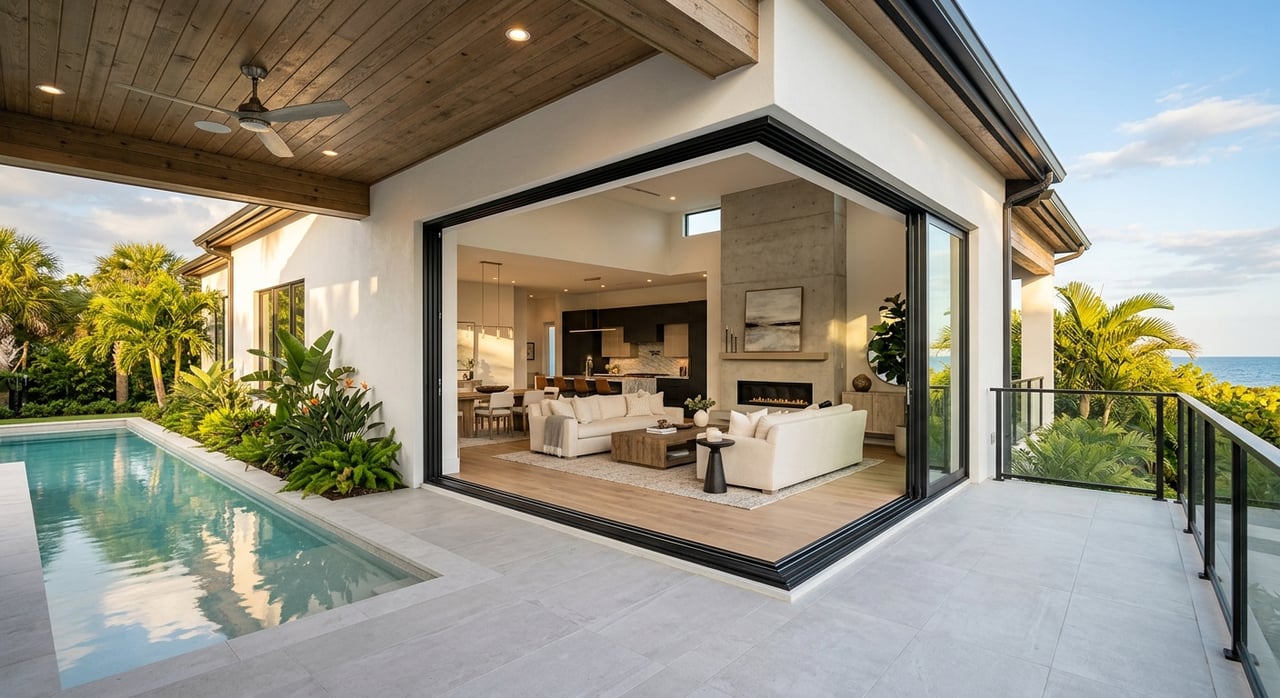
You can feel it already: morning coffee on the lanai, a quick cruise to the bay before dinner, and sunsets that paint the Manatee River. Designing a waterfront new build in Bradenton should make that image your everyday reality. The right plan also protects your investment from wind, water, and salt while keeping maintenance low. In this guide, you’ll learn how to shape views, plan for flood and wind, select durable materials, and navigate permits so your home lives beautifully and performs well. Let’s dive in.
Start with the site and rules
Know your flood zone and elevation
Before sketches, confirm your parcel’s FEMA flood zone and Base Flood Elevation (BFE). Much of Bradenton’s shoreline sits in AE or VE zones. Manatee County typically requires at least 1 foot of freeboard, which means finished floors and critical equipment should be set at BFE + 1 foot or the locally adopted Design Flood Elevation, if higher. Ask your builder to show the proposed finished-floor height and where utilities will be elevated on the plans.
Permits for shoreline and docks
Waterfront projects usually involve more than one agency. Expect a county building permit with floodplain review, plus state coordination for docks, lifts, and seawalls through the Florida Department of Environmental Protection. Some projects also need U.S. Army Corps review, especially if they affect navigable waters or wetlands. If you have mangroves, know that trimming or removal is regulated under Florida’s Mangrove Trimming and Preservation Act and can require specific methods, permits, or mitigation.
Plan for sea level and surge
NOAA projects roughly 10 to 12 inches of additional relative sea-level rise on average by 2050. Even modest shifts raise the baseline for storm surge and can change the frequency of nuisance flooding over your home’s lifetime. Use that context to set realistic dock elevations, seawall strategies, and lot grading. It also reinforces why elevation decisions, material choices, and mechanical placement matter.
Design the layout for waterfront living
View-first orientation and shading
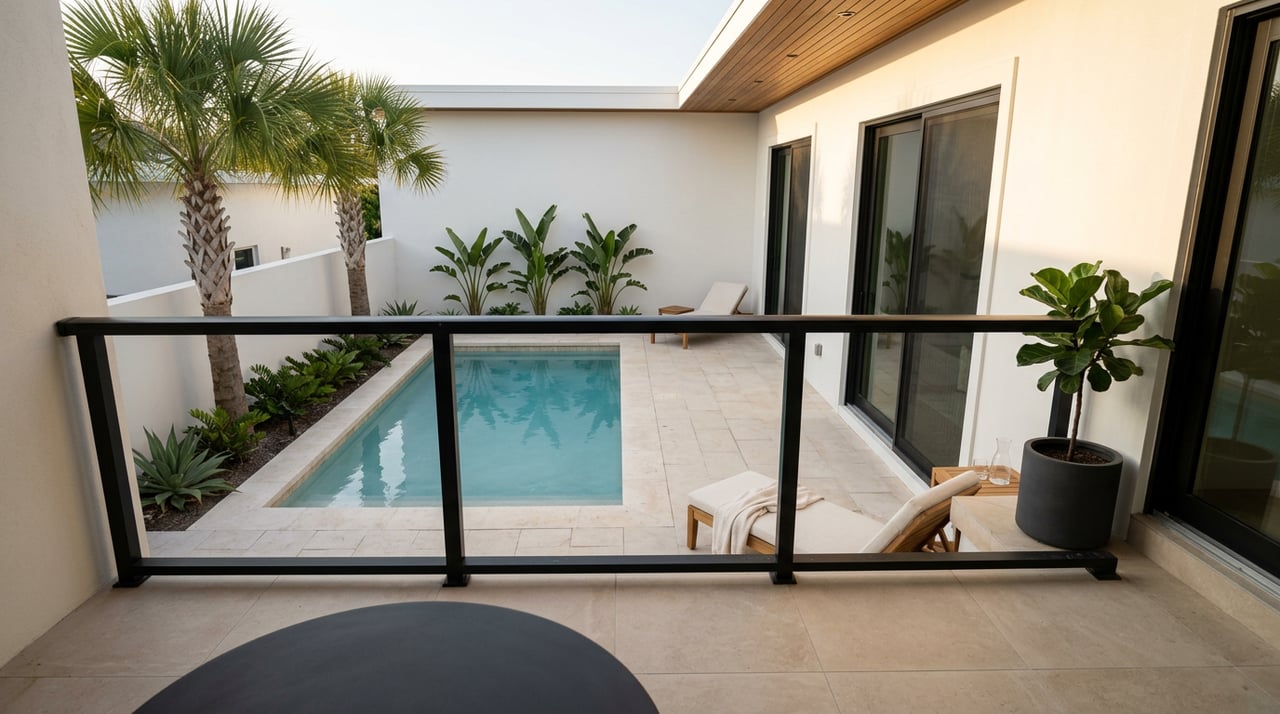
Prioritize water views from your main living spaces, owner’s suite, and kitchen. In our hot, humid climate, manage sun and glare while you frame those views. Place larger openings where you can shade them with deep lanais, overhangs, or pergolas. East and west glass often needs more protection, while south exposures work well with covered outdoor rooms.
Raise living, tuck service below
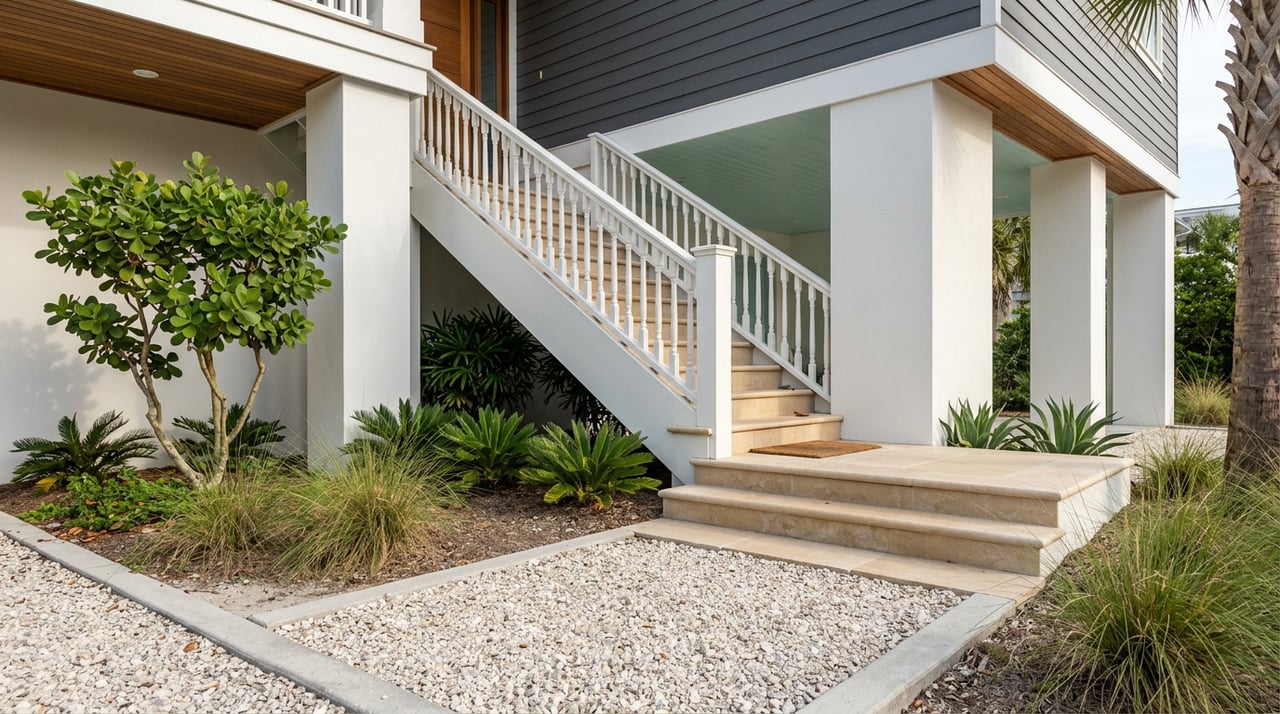
Plan your primary living level at the required flood protection elevation. Use the space below for allowed non-habitable uses like parking, storage, and a covered entry. This approach protects your interiors and simplifies utility placement. Ask your builder to confirm how the design meets code for uses below the flood elevation and how the load path ties the structure together from roof to foundation.
Outdoor rooms that work year-round
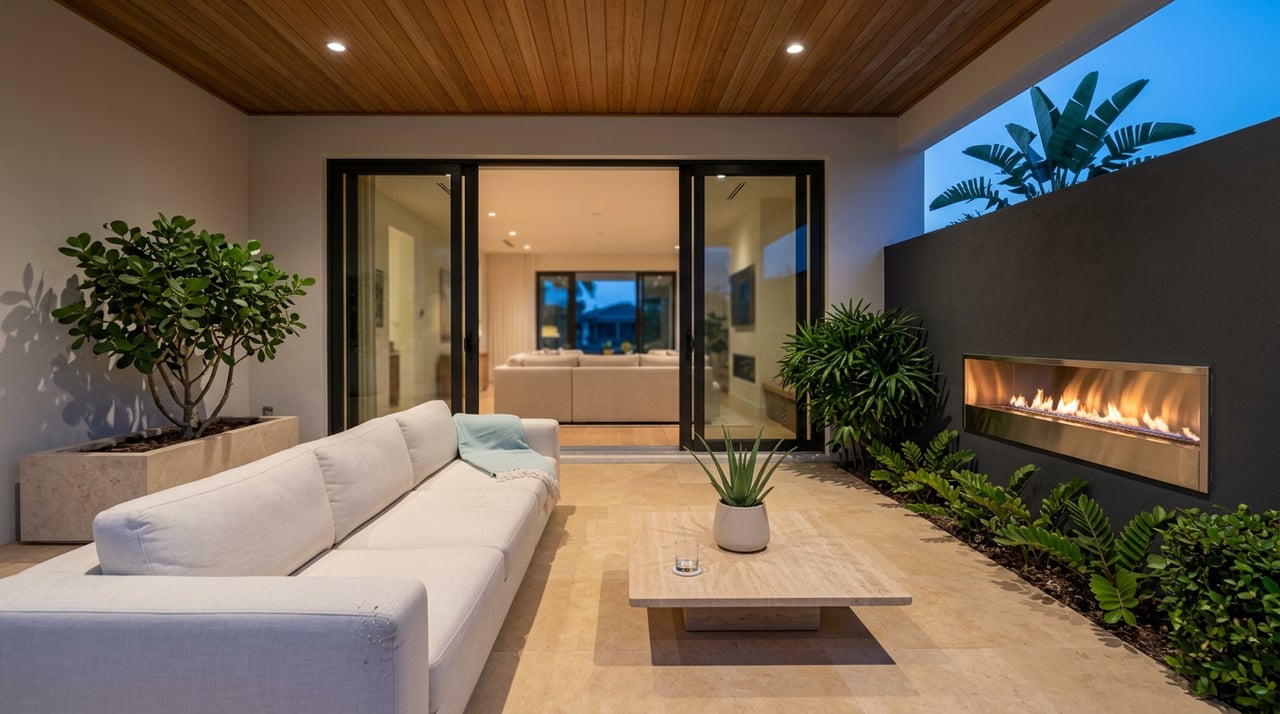
Think in layers from inside to water: great room to covered lanai to open deck to dock. A shaded transition zone reduces interior humidity when doors are open and makes your porch comfortable even in August. Retractable screens, ceiling fans, and durable outdoor finishes turn the lanai into a true living room for most of the year.
A boat-friendly service zone
Boating comes with gear and water. Plan an outdoor rinse station, hose bib with backflow prevention, lockable storage for life jackets and tackle, and a landing zone with easy-to-clean porcelain tile or sealed concrete. Keep towels, sunscreen, and spare lines close to the action so the routine stays smooth.
Choose coastal-ready materials
Windows and exterior doors
Select Florida Building Code approved products suited to local wind speeds. In windborne debris regions, impact-rated glazing or approved shutter systems are key. Look for thermally broken aluminum or fiberglass frames and marine-grade thresholds and fasteners. Request manufacturer Product Approval numbers during plan review.
Roofing and structure
Standing-seam metal and properly installed tile or engineered shingles are common Gulf Coast choices when detailed to meet local wind loads. Ask your engineer and builder to show the continuous load path on drawings, including roof-to-wall connections and strapping. Pay attention to roof-edge details and underlayment so water stays out when storms roll through.
Cladding and exterior finishes
Use systems that handle humidity, salt, and occasional splash or inundation. Fiber-cement siding, brick or stone veneer, and code-compliant stucco with a proper drainage plane are reliable options. Avoid untreated softwoods in exposed locations. Specify sealants, flashings, and coatings that are rated for marine environments to stretch maintenance intervals.
Decks, rails, and hardware
Sun, salt, and water are tough on exterior components. Choose capped composite or high-quality PVC for decking, or sustainably sourced tropical hardwood detailed for drainage. For rails and fasteners, 316 stainless or powder-coated aluminum resists chloride corrosion far better than common hardware. Extend this mindset to hinges, latches, and door hardware near salt exposure.
Dock and seawall choices
Coordinate dock and seawall design with a marine contractor who understands local rules. You will set dock projection, terminal platform size, lift clearances, and decking materials within state and county limits. Use marine-grade fasteners, treated pilings where code allows, and non-slip decking designed for wet conditions. If a seawall is needed, evaluate wake energy, soil conditions, and long-term sea-level scenarios with a qualified engineer.
Utilities and moisture control
Keep critical equipment above the required elevation or out of the floodplain entirely. That includes electrical panels, HVAC condensers, tankless or tank water heaters, and pool equipment. In Bradenton’s hot-humid climate, right-size HVAC for dehumidification rather than oversizing for raw cooling. Consider dedicated dehumidification, good air sealing, and smart controls. Place condensate drains and outdoor units where salt spray is limited and service access is easy after storms.
Smart resilience and comfort
Power and protection
An automatic whole-house generator or a solar-plus-battery system sized for critical loads keeps you comfortable during outages. Identify essentials like refrigerators, a well or sump pump if applicable, minimal HVAC, and Wi-Fi. Many owners also opt for motorized shutters or impact systems with a “storm mode” to secure openings quickly if they are away.
Water and flood monitoring
Whole-home leak detection with automatic shutoff reduces damage from burst lines. Add smart sensors in low areas, around mechanical rooms, and near exterior doors that open to decks. For docks, remote monitoring of boat lifts and pumps helps you respond fast if equipment fails during heavy weather.
Simple daily livability
Smart thermostats that favor dehumidification over short, cold bursts improve comfort. Motorized shades and retractable screens make rooms flexible from summer to winter. Use a single app or hub where possible, and select outdoor-rated enclosures and marine-grade components for any exterior electronics.
Landscape with purpose
Native, salt-tolerant plants
Choose species that handle wind and salt while giving you privacy and shade. Sea grape, buttonwood, sabal palm, and native shore grasses are all solid coastal options. They reduce erosion and require less irrigation than many non-natives. Place taller species as wind screens that do not block key views from primary rooms.
Mangroves and shoreline buffers
If your lot includes mangroves, follow Florida’s Mangrove Trimming and Preservation Act. Trimming often requires a qualified professional and may need permits or monitoring. A healthy, well-managed vegetated buffer improves water quality, supports marine life, and can soften wave energy during storms.
Erosion control options
Where erosion or wake energy is a concern, explore living shorelines or habitat-friendly designs before heavy armoring. When a seawall is required, coordinate design with your dock plan and consider future water-level scenarios. Aim to maintain access and views while protecting the edge.
Pre-design checklist
Use this quick list to reduce surprises and keep your timeline tight:
- Parcel data: FEMA FIRM panel number, current BFE, and Manatee County freeboard or Design Flood Elevation.
- Code edition: Confirm the Florida Building Code edition used on permits and ask for Product Approval numbers early for windows, doors, and roofing.
- Elevation strategy: Proposed finished-floor height, where utilities will be elevated, and how floodable areas below are used.
- Shoreline rules: Who owns adjacent submerged lands, whether the site is near an aquatic preserve, and any special overlays.
- Dock limits: Maximum projection, terminal platform size, lift rules, dredging limits, and seasonal windows for marine protections.
- Materials: Fastener grades, cladding systems, roofing attachment, dock materials, and warranty details with maintenance intervals.
- Insurance: Flood and wind coverage considerations, potential credits for elevation and mitigation features.
Timeline at a glance
- Pre-contract: Check FEMA maps and county flood overlays. Verify mangrove status and any major permitting flags.
- Design kickoff: Order a site survey with mean high-water line, existing seawall elevation, and substrate notes. Determine required finished-floor and utility elevations.
- Early permitting: Submit the building permit and coordinate state and federal dock or seawall permits. Secure HOA approvals where needed.
- Product approvals: Lock in impact glazing, roofing, and other code-required systems with product documentation.
- Build sequencing: Complete foundation and elevated utilities, then the envelope. Start dock and shoreline work once permits are in hand and timing windows open.
Ready to build your Bradenton lifestyle?
A great Bradenton waterfront home should feel effortless on day one and resilient for decades. With the right siting, smart materials, and a clear permitting plan, you can enjoy open-water views, easy boat days, and low-maintenance living. If you want a trusted local partner who blends waterfront expertise with builder experience and concierge service, connect with Jo-Lee Mansfield to schedule a free consultation.
FAQs
What elevation should a Bradenton waterfront home use?
- Manatee County typically requires finished floors and critical equipment at least 1 foot above the FEMA Base Flood Elevation or at the locally adopted Design Flood Elevation, whichever is higher.
Do you need impact windows near the Manatee River?
- In local windborne debris regions, Florida Building Code requires impact-rated openings or approved protection; most waterfront builds use impact windows and doors for safety and convenience.
Who permits docks and boat lifts in Bradenton?
- Expect a county building permit, Florida Department of Environmental Protection authorization, and in many cases U.S. Army Corps review; a good marine contractor will coordinate submittals.
Which roofing performs best for Gulf Coast winds?
- Properly detailed standing-seam metal, tile, or engineered shingles rated for local wind speeds all perform well when paired with a continuous load path and strong edge details.
How do mangrove rules affect backyard views?
- Mangroves are protected in Florida; trimming or removal often needs permits and must follow specific methods, so plan views and landscape buffers with those rules in mind.
What smart-home features help during storms?
- A generator or battery backup for critical loads, leak and flood sensors, and motorized shutters or impact systems with a central “storm mode” improve safety and peace of mind.